

Walking rarely gets the attention given to hard workouts. Yet its greatest strength is how easily it fits into a real life: before work, after dinner, on a trail, or between long stretches of sitting.
The benefits of walking extend beyond burning calories. A regular walking habit can help you build aerobic activity into your week, support physical and mental health, and create a foundation for doing more of the things you enjoy. The pace and amount that work for you can change over time.
- A comfortable walk is a useful starting point; brisk walking can count toward weekly moderate-intensity activity.
- Regular physical activity supports heart health, sleep and mental well-being, among other benefits.
- Start with a repeatable amount. You can gradually add time, pace or terrain as your capacity grows.
- Walking works alongside strength training; adults are advised to do both.
Why walking earns a place in your fitness routine
Walking is familiar, but that does not make it insignificant. You can adjust the effort by changing your pace, the distance, the grade or the surface. An easy neighborhood walk may be a gentle way to move on a recovery day. A brisk walk that raises your breathing can serve as aerobic exercise. A hilly trail asks more of your legs and your attention to the ground.
There is also less setup. You do not need to learn a complicated routine before your first walk. That makes walking especially useful if your goal is to build a habit you can keep. The World Health Organization includes walking among common ways to be active and notes that movement for transport, recreation and daily life all count as physical activity.
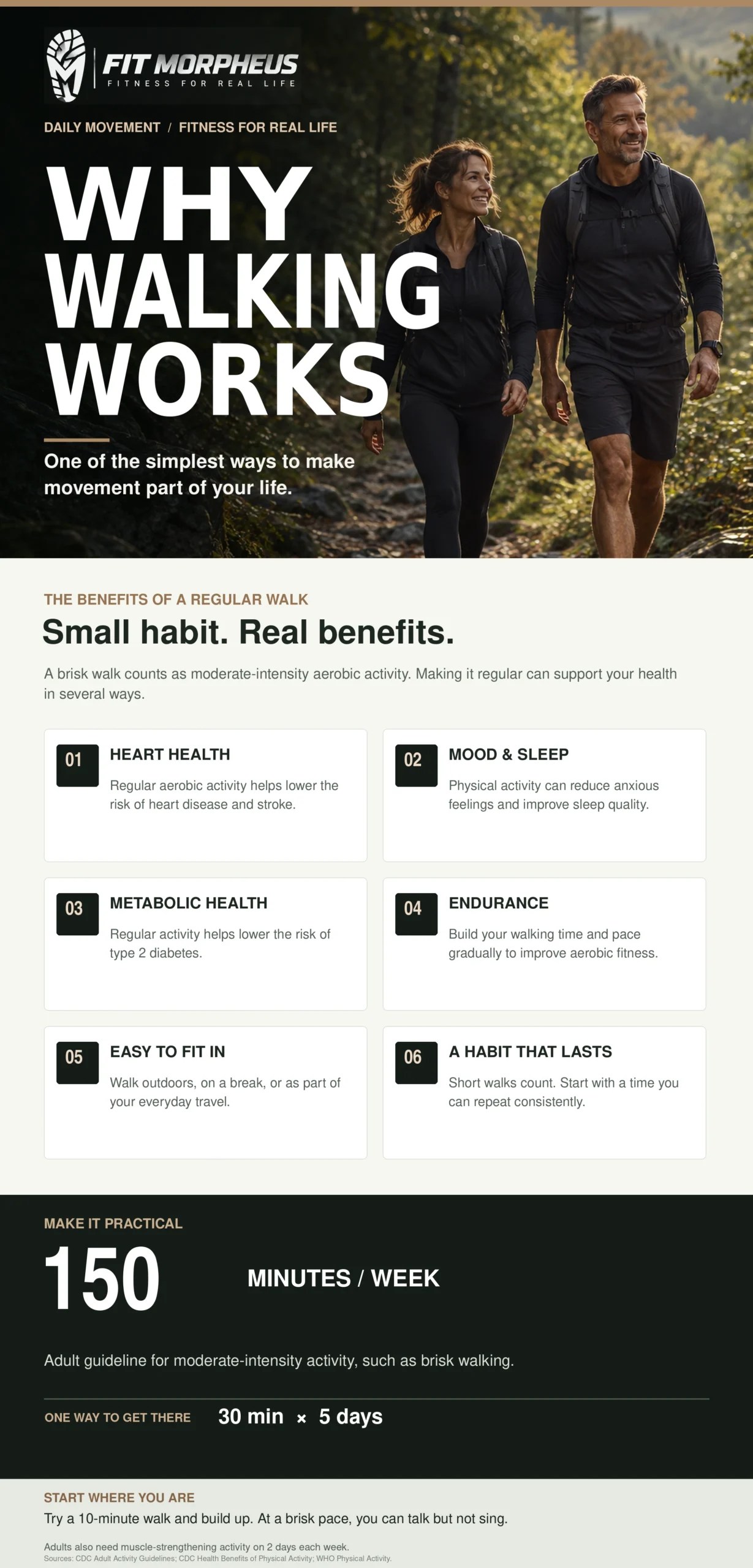
The benefits of walking, in practical terms
Many studies and public-health recommendations discuss the benefits of regular physical activity, with brisk walking given as one way to get it. The benefits below depend on the activity you actually accumulate over time; an occasional walk is still worthwhile, but it is not a promise of a particular health outcome.
Heart and metabolic health
Brisk walking gives your heart and lungs steady work. Regular physical activity is linked with a lower risk of heart disease, stroke and type 2 diabetes, according to the CDC.
Mood and sleep
Activity can reduce feelings of anxiety and improve sleep quality. A walk can also give you a manageable break in the day, whether that is time outdoors or a few minutes away from a desk.
Useful aerobic endurance
As you gradually extend a comfortable walk or increase the pace, you practice sustaining movement for longer. That can support ordinary goals such as walking farther through town or feeling better prepared for a hike.
More movement throughout the day
A walk can fit around your schedule in smaller pieces. Walking to an errand, taking a lunch break outside or adding a loop after dinner gives you another opportunity to move.
What pace counts as exercise?
That depends on your current fitness and how hard the walk feels to you. A leisurely walk still adds movement to your day. If you are aiming for moderate-intensity aerobic activity, a brisk walk will usually raise your breathing and heart rate. The CDC’s simple talk test is useful: at moderate effort, you can talk but would find it difficult to sing.
You do not need to make every walk brisk. An easier outing can be the right choice when you are beginning, recovering from a harder training day, or simply trying to keep the habit going. You can save purposeful brisk walks for the times when you want an aerobic challenge.
The CDC adult guideline is at least 150 minutes of moderate-intensity aerobic activity each week, such as brisk walking, plus muscle-strengthening activity on at least two days. Thirty minutes on five days is one example; smaller chunks can add up. If you are below that amount now, some activity is still better than none.
How to begin without making it complicated
Pick a time and place you can repeat. A ten-minute walk after lunch is a better first plan than a long route you cannot fit into your week. Walk at a pace that lets you settle in, notice how you feel the next day, and add time gradually when it feels manageable.
- Choose a reliable cue. Walk after a meal, before work or when you finish a meeting.
- Start with a short route. Five to ten minutes is a reasonable first outing if you have been inactive.
- Repeat before you progress. Make the route familiar, then add a few minutes or include a brisk segment.
- Keep an easier option. If the weather, schedule or energy level changes, shorten the walk instead of dropping the habit entirely.
You do not need a universal step target to get started. Minutes walked and how the effort feels are often easier to use. Let your current ability guide the starting point, especially if walking causes persistent pain or symptoms that are new for you.
A simple example week
If you are already comfortable walking for around half an hour, this schedule shows one way brisk walks can add up to 150 minutes. It is an example to adapt, not a requirement to follow day for day.
| Day | Walking | Other movement |
|---|---|---|
| Monday | 30-minute brisk walk | — |
| Tuesday | 30-minute brisk walk | Strength training |
| Wednesday | 30-minute brisk walk | — |
| Thursday | Easy walk if you like | Strength training |
| Friday | 30-minute brisk walk | — |
| Saturday | 30-minute brisk walk or suitable hike | — |
| Sunday | Easy walk or rest | — |
For a broader plan that combines aerobic activity with useful strength, see our Fitness After 40 guide. If walking or hiking highlights stiffness, our Mobility, Movement & Recovery guide covers practical ways to work on movement quality.
Walking is a foundation, not the whole program
Walking can do a lot, but it does not train every physical quality equally. Strength work helps you practice lifting, carrying, getting off the floor and building capacity under load. Mobility and balance practice can help you move confidently through different positions. A capable routine can include all of these without requiring you to spend every day in a gym.
That is the Fit Morpheus approach to daily movement: give walking a real place in your week, then build strength and movement skills around the life you want to live. Some days that means a brisk neighborhood loop. Others it means an easy recovery walk or a long trail with a friend.
Frequently asked questions
Is a 10-minute walk worth doing?
Yes. It adds activity to your day and can be a practical way to establish a routine. The CDC notes that activity can be broken into smaller chunks and that some movement is better than none. Build from the amount you can repeat.
Do I have to walk outdoors?
No. A safe indoor route or walking pad can be an option when weather, daylight or your schedule makes outdoor walks difficult. What matters for your weekly aerobic goal is the duration and intensity of your activity, not whether the walk happens outside.
Can walking replace strength training?
Walking supports aerobic activity and everyday movement, while strength training challenges your muscles in ways walking alone may not. Current adult guidelines recommend at least two muscle-strengthening days each week in addition to aerobic activity.
The takeaway: You can start walking with what you have today. Make it repeatable, add brisk effort when you are ready, and let the habit support everything else you want your body to do.
Leave a Reply