Fitness often starts from the top down. People focus on bigger arms, stronger legs, better abs, or losing weight. They think about the gym, the workout plan, the meal plan, the shoes, the supplements, or the latest fitness trend. But real fitness starts much lower.
It starts with your feet.
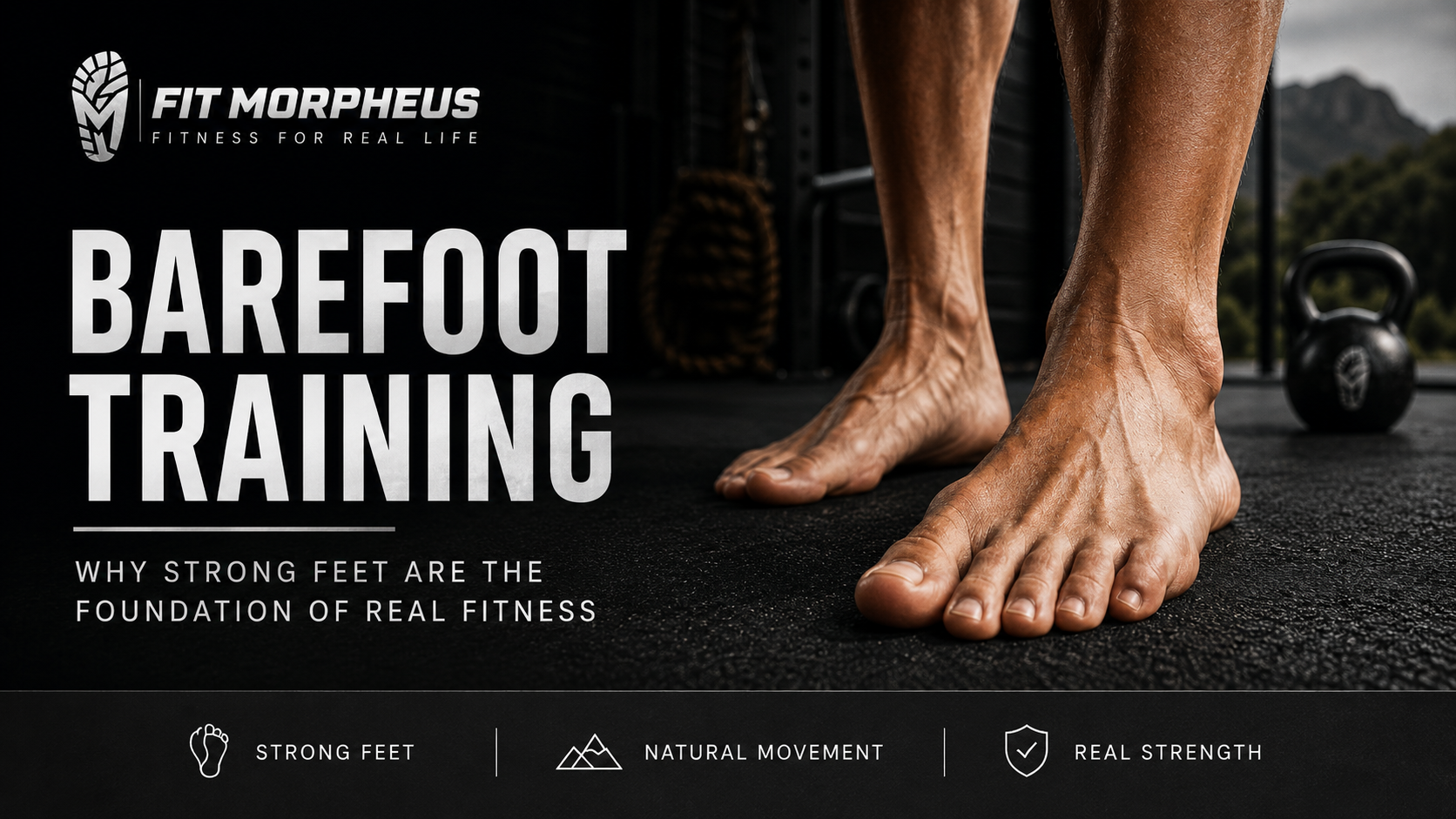
Your feet are the foundation of nearly every movement you make. Walking, running, squatting, lunging, carrying groceries, climbing stairs, hiking, balancing, lifting, and even standing all depend on how well your feet connect with the ground. When your feet are weak, stiff, or disconnected, the rest of your body has to compensate. Over time, that can affect your ankles, knees, hips, back, posture, and overall movement quality.
That is why barefoot training is such an important part of natural fitness. At Fit Morpheus, the goal is not to chase fads or quick fixes. The goal is to build a healthier lifestyle through real movement, better habits, and strength that carries over into everyday life. Barefoot training fits perfectly into that approach because it helps rebuild the body from the ground up.
What Is Barefoot Training?
Barefoot training simply means performing certain exercises without traditional cushioned shoes or with minimalist footwear that allows the foot to move more naturally. The goal is not to be barefoot all day or to suddenly throw away every pair of shoes you own. The goal is to restore awareness, strength, and mobility in the feet so they can do the job they were designed to do.
Modern shoes often provide a lot of cushioning, arch support, stiff soles, and narrow toe boxes. While this may feel comfortable in the short term, it can also reduce how much your feet have to work. Over time, the muscles in the feet can become weaker, the toes can lose mobility, and your ability to feel and respond to the ground can decrease.
Barefoot training helps wake the feet back up. It encourages the toes to spread, the arches to engage, and the ankles to stabilize. It also improves your ability to sense pressure, balance, and body position. This is called proprioception, and it plays a major role in coordination, athletic ability, and injury prevention.
Your Feet Are Built for Strength and Movement
Each foot is made up of bones, joints, muscles, tendons, ligaments, and nerves that all work together to create a powerful support system. The foot is not just a flat platform. It is an active, responsive structure designed to absorb force, create stability, and help propel you forward.
When you walk, your foot adapts to the ground. When you squat, your feet help create a stable base. When you carry something heavy, your feet help transfer force through the entire body. When you balance on one leg, your foot constantly makes small adjustments to keep you upright.
This is why strong feet matter. If the foundation is weak, everything above it has to work harder. A weak or unstable foot can contribute to poor ankle control. Poor ankle control can affect the knees. Poor knee tracking can affect the hips. Restricted hips can affect the low back. The body is connected, and the feet are the first point of contact with the ground.
Barefoot training helps restore that connection.
Barefoot Training Improves Balance
One of the first things people notice when they start barefoot training is how much harder simple movements can feel. A bodyweight squat, single-leg balance, or lunge may feel completely different without thick-soled shoes.
That is because your feet are receiving more information from the ground. Instead of being separated by layers of cushioning, your nervous system can better sense pressure and position. This helps your body make better adjustments in real time.
Balance is not just for athletes. Balance matters when you step off a curb, hike on uneven ground, carry something heavy, climb a ladder, or age with confidence. Stronger feet and better ground awareness can help improve stability in daily life.
A simple exercise like standing on one foot barefoot can reveal a lot. You may notice your toes gripping, your ankle wobbling, or your arch working harder than expected. That is not a bad thing. That is your foot learning to do its job again.
Barefoot Training Builds Real-Life Strength
At Fit Morpheus, fitness is about more than looking fit. It is about being capable. Real-life strength means being able to lift, carry, climb, squat, reach, walk, and move with confidence.
Barefoot training supports this because it improves the way your body creates force from the ground. Most strength movements begin with your feet. When you deadlift, squat, lunge, push a sled, or perform a farmer’s carry, your feet create the base.
A stronger base allows better force transfer. Think about trying to lift something heavy while standing on a soft mattress. It would be much harder because your foundation is unstable. While cushioned shoes are not the same as a mattress, the idea is similar. Too much separation from the ground can reduce stability and feedback.
Barefoot or minimalist training can help you feel the ground, spread your toes, engage your arches, and create better tension through the legs. This can make exercises like squats, kettlebell deadlifts, carries, and bodyweight movements feel more connected and controlled.
Barefoot Movement Supports Better Posture
Posture does not begin at the shoulders. It begins at the ground.
The way your feet contact the floor can influence the alignment of your ankles, knees, hips, spine, and head. If your feet collapse inward, your knees may follow. If your ankles lack mobility, your squat pattern may suffer. If your weight is constantly shifted forward onto your toes or backward onto your heels, your body may compensate somewhere else.
Barefoot training can help you become more aware of these patterns. You can feel whether your weight is evenly distributed. You can notice if your toes are gripping too hard. You can sense whether your arches are collapsing or if one side of your body is taking more load than the other.
This awareness matters. Before you can correct movement, you need to feel movement. Barefoot training gives you more feedback so you can improve how you stand, walk, lift, and move.
The Problem With Always Wearing Supportive Shoes
Support is not always bad. Some people need supportive shoes for specific conditions, long workdays, recovery, or certain activities. The issue is not that shoes exist. The issue is that many people never allow their feet to function without constant support.
If a muscle is never challenged, it tends to weaken. The same concept applies to the feet. If shoes are always doing the stabilizing, cushioning, and supporting, the foot may become less capable over time.
Many modern shoes also narrow the toes. This can limit toe spread and reduce the natural stability of the foot. Your toes are supposed to help with balance and push-off. When they are cramped, they cannot contribute as effectively.
Barefoot training gives the feet a chance to work again. It does not have to be extreme. Even a few minutes a day of barefoot mobility, balance work, or light strength training can make a difference over time.
How to Start Barefoot Training Safely
Barefoot training should be introduced gradually. If your feet have spent years in cushioned, supportive shoes, they need time to adapt. Doing too much too soon can create soreness or irritation.
Start simple. Spend a few minutes barefoot at home. Practice standing with your weight evenly distributed between the heel, big toe, and little toe. This is often called the tripod foot. It helps create a stable base without gripping the floor excessively.
From there, add basic movements such as toe spreads, calf raises, bodyweight squats, short walks around the house, and single-leg balance drills. Keep the volume low at first. The goal is to build capacity, not force progress.
You can also begin using barefoot training during controlled workouts. Exercises like kettlebell deadlifts, farmer’s carries, glute bridges, lunges, and mobility drills can work well when performed barefoot or in minimalist shoes. High-impact activities like running or jumping should be approached much more carefully and only after your feet and lower legs have adapted.
Simple Barefoot Exercises for Beginners
One of the best parts of barefoot training is that you do not need complicated equipment. You can start with basic exercises that improve strength, awareness, and control.
Toe Spreads: Stand barefoot and try to spread your toes wide without curling them. This helps improve toe control and foot awareness.
Tripod Foot Practice: Stand tall and feel three points of contact: heel, base of the big toe, and base of the little toe. Try to keep all three points grounded.
Single-Leg Balance: Stand on one foot for 20 to 30 seconds. Keep your toes relaxed and your arch active. Switch sides.
Calf Raises: Slowly rise onto the balls of your feet, then lower with control. Focus on even pressure through the big toe and second toe.
Barefoot Squats: Perform slow bodyweight squats while keeping your feet connected to the floor. Notice whether your arches collapse or your heels lift.
Farmer’s Carries: Hold weights at your sides and walk slowly with control. This builds grip, core strength, posture, and foot stability all at once.
These exercises may look simple, but they are powerful when done consistently. Barefoot training does not need to be flashy to be effective.
Barefoot Training and Natural Workouts
Barefoot training connects directly to natural workouts. Natural fitness is about training the body in ways that support real life. Instead of only using machines that isolate muscles, natural workouts focus on movements like carrying, crawling, squatting, hinging, pushing, pulling, walking, balancing, and rotating.
Your feet play a role in all of these patterns.
A farmer’s carry teaches real-world strength because life often requires carrying heavy things. A squat teaches you how to get down and back up. A hinge helps you lift safely. Crawling builds coordination and full-body control. Walking and hiking build endurance and resilience.
Barefoot training enhances these movements because it improves your connection to the ground. It helps your body move as one integrated system instead of a collection of disconnected parts.
Barefoot Training Is Not a Fitness Fad
Barefoot training may sound trendy, but the concept is not new. Humans moved barefoot or in minimal footwear for most of history. The modern fitness world is simply rediscovering the importance of foot strength and natural movement.
That does not mean everyone needs to train barefoot all the time. It also does not mean shoes are bad. The smarter approach is balance. Use shoes when they serve a purpose. Train your feet so they are not dependent on support all the time.
That is the Fit Morpheus mindset: lifestyle over fads. The goal is not extreme restriction, punishment workouts, or chasing the newest trend. The goal is to build a strong, capable body that supports your life.
Who Should Be Careful With Barefoot Training?
Barefoot training can be beneficial, but it is not something everyone should rush into. If you have diabetes-related foot issues, nerve problems, severe foot pain, recent surgery, advanced arthritis, plantar fasciitis, or a history of serious lower-leg injuries, it is smart to talk with a qualified professional before making major changes.
Even for healthy individuals, the transition should be gradual. Foot muscles, calves, Achilles tendons, and connective tissue need time to adapt. Soreness can happen, especially in the beginning. Sharp pain, persistent discomfort, or worsening symptoms are signs to back off and reassess.
Barefoot training should help your body move better, not beat it up.
Building a Stronger Foundation With Fit Morpheus
Strong feet are not just about feet. They are about better movement, better balance, better strength, and better long-term health. When your foundation improves, the rest of your body has a better chance to move the way it should.
At Fit Morpheus, barefoot training is part of a bigger philosophy. Fitness should support your life, not take it over. Workouts should build strength you can use. Nutrition should be sustainable. Coaching should be affordable and practical. Health should feel natural, not forced.
Whether you are just starting your fitness journey or trying to improve the way your body moves, barefoot training is a powerful place to begin. Start small. Be consistent. Pay attention to how your body feels. Build strength from the ground up.
Because real fitness is not just about what you can lift, how far you can run, or how you look in the mirror.
Real fitness starts with the foundation beneath you.