Fit Morpheus · Strength & Functional Fitness
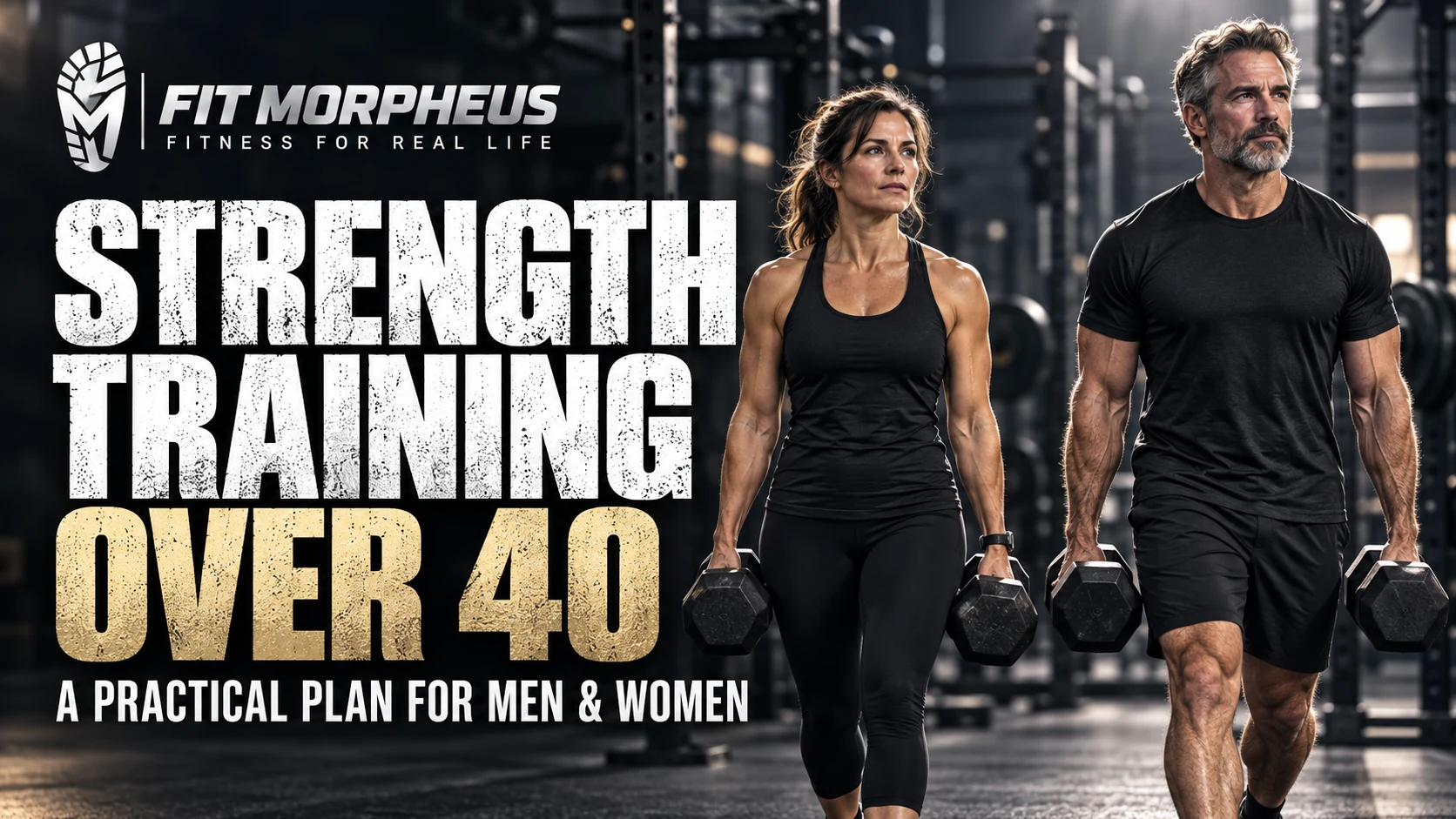
Strength training over 40 works best when the plan is challenging enough to develop your abilities and practical enough to repeat.
This full-body A/B program gives men and women a clear starting point: useful exercises, manageable training volume, and gradual progression.
Turning 40 does not mean you need to stop lifting, avoid challenging exercise, or settle for a routine that never gets harder.
It does mean your program needs to fit your actual starting point. Training experience, previous injuries, work demands, sleep, and available time matter more than the birthday on your calendar.
There is no single best strength training program for everyone over 40. The plan below is a practical option for generally healthy beginners and people returning to training. You can adapt the exercises and schedule as your capacity grows.
For the principles behind the program, read our Strength & Functional Fitness Complete Guide .
Your Strength Training Over 40 Infographic
Use this infographic as a quick reference. The sections below explain the workouts, starting loads, substitutions, and progression in more detail.

Why Keep Strength Training After 40?
Muscle-strengthening activity helps maintain or increase strength and muscle mass. That matters for exercise, but also for carrying bags, climbing stairs, lifting objects, and staying physically capable.
The aim can include building muscle, improving performance, or making everyday tasks more manageable. You do not have to choose only one.
Strength training is one part of a complete activity routine. Aerobic fitness, balance, and mobility still deserve attention. Our Fitness After 40 Complete Guide explains how to bring those elements together.
Should Men and Women Use Different Programs?
Men and women can use the same basic framework. Both can train squatting, hinging, pushing, pulling, and carrying.
Choose resistance according to your own ability, rather than a weight assigned by sex or age. One person may begin with bodyweight exercises; another may need substantial external resistance.
Health conditions, pregnancy, menopause-related symptoms, previous injuries, and personal goals may influence exercise choices and recovery. Adjust the individual program rather than assuming everyone needs an entirely different training system.
How Often Should You Train?
General adult guidelines recommend muscle-strengthening activity on at least two days each week, involving all major muscle groups. This program offers a two-day starting option and the three-day schedule shown in the infographic.
| Schedule | Week 1 | Week 2 |
|---|---|---|
| Two days | Monday: A Thursday: B |
Monday: A Thursday: B |
| Three days | Monday: A Wednesday: B Friday: A |
Monday: B Wednesday: A Friday: B |
The weekdays are examples. Leave a day between full-body sessions where possible, and move sessions when work or recovery demands it. If you miss a workout, continue with the next A or B session instead of cramming several sessions together.
Before You Start: Equipment and Warm-Up
The original plan uses dumbbells, a stable bench or elevated push-up surface, and a lat pulldown machine. A kettlebell can replace a dumbbell for the goblet squat. Use the substitutions below when equipment is limited.
Warm up for approximately five to ten minutes with comfortable walking, cycling, or similar movement. Then rehearse the first exercises with little or no resistance.
Keep your training area clear. Check that benches, supports, and any band anchors are secure.
Workout A: Squat, Hinge, Push, Pull, Carry
Begin with one or two working sets of each exercise. Perform the exercises in the listed order, resting between sets rather than racing through a circuit.
| Exercise | Starting sets | Repetitions or time |
|---|---|---|
| Goblet squat | 1–2 | 6–10 repetitions |
| Dumbbell Romanian deadlift | 1–2 | 8–12 repetitions |
| Incline push-up | 1–2 | 6–12 repetitions |
| Supported dumbbell row | 1–2 per side | 8–12 repetitions per side |
| Farmer carry | 1–2 carries | 20–30 seconds |
Goblet Squat
Hold the weight close to your chest. Lower yourself through a comfortable range, keeping your feet planted, then stand. Begin with a chair sit-to-stand or bodyweight squat if holding a load makes the movement difficult.
Dumbbell Romanian Deadlift
Hold the dumbbells near your legs with a slight bend in your knees. Move your hips backward, letting your torso lean forward as the weights stay close. Stop before you lose control of your position, then stand by bringing your hips forward. The weights do not need to reach the floor.
Incline Push-Up
Place your hands on a sturdy elevated surface. Keep your body aligned as you lower your chest toward it and press away. A higher surface makes the exercise easier. Lower the surface gradually as you improve.
Supported Dumbbell Row
Support yourself with one hand on a sturdy bench or surface. Pull the dumbbell toward your side, then lower it under control. Avoid jerking the weight or turning the movement into a large torso twist.
Farmer Carry
Hold a manageable weight in each hand and walk along a clear, level route. Keep the weights controlled and continue breathing. End the carry before grip fatigue or loss of balance compromises control.
Workout B: Single-Leg Work and Complementary Movements
| Exercise | Starting sets | Repetitions or time |
|---|---|---|
| Supported split squat | 1–2 per side | 6–10 repetitions per side |
| Glute bridge | 1–2 | 8–12 repetitions |
| Dumbbell chest press | 1–2 | 8–12 repetitions |
| Lat pulldown | 1–2 | 8–12 repetitions |
| Suitcase carry | 1–2 carries per side | 20–30 seconds per side |
Supported Split Squat
Take a staggered stance and hold a sturdy support. Bend your knees to lower yourself through a manageable range, then rise. Start without weights. Support helps you focus on leg effort rather than struggling to balance.
Glute Bridge
Lie on your back with knees bent and feet planted. Lift your hips, keeping the movement comfortable and avoiding an exaggerated arch through your lower back. Lower with control. Begin with body weight.
Dumbbell Chest Press
Lie on a stable bench and press manageable dumbbells upward from a comfortable starting position. Keep your wrists controlled and lower the weights steadily. A floor press or another incline push-up session is an alternative.
Lat Pulldown
Adjust the machine so you sit securely. Pull the handle toward your upper chest without swinging your torso, then let it rise under control. Avoid pulling behind your neck. A securely anchored band pulldown can provide an alternative.
Suitcase Carry
Hold one weight at your side and walk on a clear, level route. Resist leaning markedly toward or away from the load. Complete the carry, then change hands.
How Heavy Should the Weights Be?
Choose a load that lets you complete the prescribed repetitions with steady technique while leaving approximately two or three good repetitions available. This is often called keeping repetitions in reserve.
For example, if you finish eight rows and feel you could perform another two or three controlled repetitions, the effort is a reasonable starting point.
Beginners may find that estimate difficult. Start conservatively and adjust over several sessions. Avoid maximum-effort testing while you are learning the exercises.
Rest approximately one to two minutes between sets. Take longer when needed to regain your breathing and perform the next set with control.
How to Progress the Program
Keep the exercise selection consistent long enough to learn it. Increase the challenge when performance supports the change.
- Build repetitions first. Work gradually toward the top of the exercise’s repetition range.
- Confirm control. Reach that amount across your sets without losing technique or using all your remaining effort.
- Add a small amount of resistance. Return toward the lower end of the repetition range and build again.
- Change one thing at a time. Avoid increasing weight, sets, and weekly sessions together.
For carries, first build toward 30 controlled seconds, then consider a modest load increase. For incline push-ups, a slightly lower surface can increase the challenge.
Progress is earned, not scheduled
You do not have to lift more every week. Repeating a manageable load while improving technique is useful progress, especially when returning to training.
Your First Four Weeks
| Week | Main priority | Possible adjustment |
|---|---|---|
| 1 | Learn the exercises with conservative resistance. | Use two sessions and one set per exercise if needed. |
| 2 | Repeat the movements and assess recovery. | Add a second set to selected exercises if comfortable. |
| 3 | Build consistency and controlled repetitions. | Keep two days or consider a third; hold other variables steady. |
| 4 | Review your training log and technique. | Increase a load only where your performance supports it. |
This is an introduction, not a four-week transformation promise. Continue the plan while it remains useful. Add training volume gradually if your goals and recovery justify it.
Exercise Substitutions
You can preserve the purpose of the session while changing a movement that does not suit your body or equipment.
- Goblet squat: chair sit-to-stand or leg press.
- Romanian deadlift: unloaded hinge practice or an elevated deadlift.
- Incline push-up: wall push-up or machine chest press.
- Dumbbell row: seated cable row or securely anchored band row.
- Split squat: low supported step-up or a comfortable squat variation.
- Glute bridge: standing hip extension with support if floor access is difficult.
- Chest press: floor press or incline push-up.
- Lat pulldown: secure band pulldown; a row is a practical pulling substitute when overhead movement is unsuitable.
Substitutions are not identical exercises. Select an option that allows comfortable, repeatable effort. If carrying is unsuitable, omit it while you obtain guidance on an appropriate alternative.
Recovery, Walking, and Nutrition
Walking or easy cardio can fit between strength sessions, but keep it easy enough that it does not undermine recovery. Build aerobic activity toward general guidelines as your capacity allows.
Aim for consistent sleep and adequate nutrition. Include protein-containing foods across your regular meals rather than treating supplements as a requirement. Explore our Nutrition & Body Composition Complete Guide for more context.
Physical work, demanding hikes, and recreational sports contribute to your total workload. Account for them when deciding whether to add another strength session.
If soreness makes ordinary activities difficult, reduce the next session’s workload. Soreness is not a requirement for effective training. Our Mobility, Movement & Recovery Complete Guide covers the supporting habits.
When to Modify the Plan or Get Help
Stop or change an exercise that causes new or worsening pain. Persistent symptoms, an existing injury, or a medical condition may require individual guidance from an appropriate professional.
Chest pain, fainting, or unusual severe breathlessness warrant stopping exercise and seeking medical attention. Ordinary muscular effort should not be confused with warning symptoms.
When an exercise is unfamiliar, a qualified trainer can help you find an appropriate variation and check your technique.
Frequently Asked Questions
Is two days of strength training enough to start?
Yes. Two full-body sessions are a practical starting option. Use a third day when it fits your schedule, goals, and recovery.
Can women use the same workouts as men?
Yes. Adjust loads, exercise variations, and volume to the individual. The basic movement framework does not need to change simply because of sex.
Can I build muscle after 40?
Muscle-strengthening activity can help adults increase or maintain muscle mass and strength. Results depend on training, nutrition, consistency, health, and individual circumstances.
Should I train to failure?
This starting plan leaves approximately two or three controlled repetitions in reserve. You do not need to reach failure to follow it.
How long should I follow this program?
Continue while you can perform it consistently, recover, and make useful progress. Review it after the first month, then adjust according to your goals.
Start With a Week You Can Repeat
Choose two nonconsecutive days, select manageable exercise variations, and record your sets, repetitions, and loads. Build from that starting point.
Strength training over 40 should support the activities you want to keep doing. A repeatable program gives you a practical way to work toward that goal.
Continue learning with our complete strength and functional fitness guide .
Sources
- Centers for Disease Control and Prevention: Adult physical activity recommendations .
- Centers for Disease Control and Prevention: Benefits of physical activity .
The A/B routine is an example Fit Morpheus program, not a CDC-prescribed workout or an individualized rehabilitation plan.
Leave a Reply