
FIT MORPHEUS • Nutrition & Body Composition
A high-protein diet for body recomposition works best as a repeatable meal pattern. Build meals you enjoy, support progressive strength training, and adjust portions using your longer-term results. More protein alone does not guarantee fat loss or muscle gain.
Build the meal pattern before chasing perfect numbers
Body recomposition describes gaining or maintaining muscle while reducing body fat. The balance is individual, and changes can be slow. This guide focuses on assembling food and managing a busy week. For the age-specific protein discussion, start with How Much Protein Do You Need After 40?.
Choose a practical protein target
The ISSN position stand suggests roughly 1.4–2.0 grams per kilogram of body weight daily for most healthy exercising adults. For an illustrative 75 kg adult, that is 105–150 grams. This is a reference range, not a personal prescription. Training, food intake and health affect the appropriate target. [1]
Instead of building every meal around the largest possible serving, distribute your chosen daily total over meals you can maintain. Three meals and an optional snack is one workable arrangement. If you have kidney disease or a prescribed diet, agree on a target with your clinician or registered dietitian.
Use a four-part meal builder
- Pick the protein. Chicken, fish, eggs, Greek yogurt, tofu, tempeh, beans or lentils can anchor the meal. Check the serving label rather than assuming equal portions provide equal protein.
- Add produce. Use a fruit or vegetable you will actually eat. Frozen vegetables and berries can reduce preparation.
- Include carbohydrate. Oats, rice, potatoes, whole-grain bread and quinoa are useful options. Adjust portions to appetite, activity and your overall food intake.
- Account for fats and extras. Oil, nuts, cheese and sauces can fit, but measure them if unplanned portions make your intake difficult to judge.
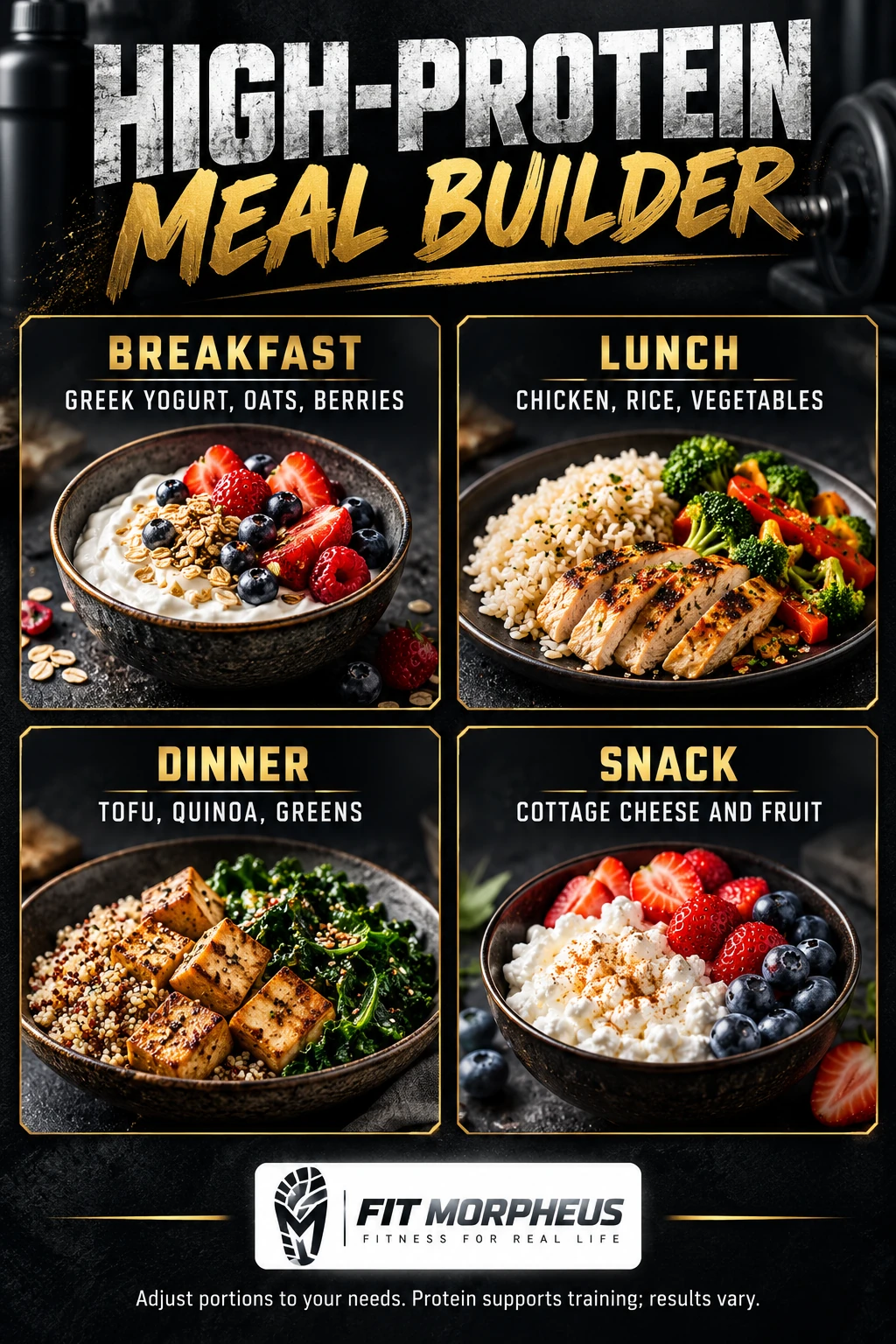
An adaptable day of high-protein meals
| Meal | Assembly | How to adapt |
|---|---|---|
| Breakfast | Plain Greek yogurt, oats and berries | Use a higher-protein dairy-free yogurt if suitable; compare labels. |
| Lunch | Chicken, rice and mixed vegetables | Swap chicken for tofu or tempeh; change the portion to suit the protein target. |
| Dinner | Tofu, quinoa and greens | Try fish or lean meat on another day; add beans for variety. |
| Optional snack | Cottage cheese and fruit | Use edamame or a suitable yogurt if you avoid dairy. |
These are meal ideas, not a nutritionally calculated menu. Exact protein and energy depend on brand, portion, preparation and additions. Choose the amount of each protein food using its label, then add the totals for your actual day. You do not need all four meals if another pattern fits better.
Make a short shopping list you can reuse
Choose two protein anchors, two carbohydrate staples, three kinds of produce, and one or two sauces. That gives you several combinations without buying ingredients for seven unrelated recipes. For example: chicken and tofu; rice and oats; broccoli, spinach and berries; salsa and a yogurt-based sauce.
Keep a backup meal for late workdays: canned beans with microwave rice and frozen vegetables, or a yogurt bowl with oats and fruit. Convenience can support consistency. Compare labels and account for allergies rather than judging a food only by whether it is packaged.
Prep components, then change the flavor
- Cook a manageable amount of one or two proteins and a carbohydrate staple.
- Wash produce or portion frozen options. Keep sauces separate.
- Build lunch containers around the same base and rotate herbs or sauces.
- Refrigerate promptly and follow the storage instructions appropriate to the ingredients. Freeze portions you will not use within their safe storage period.
A smaller preparation session you repeat is often easier than preparing an entire week at once. Never judge food safety by smell alone.
Adjust for recomposition without underfueling
Pair the meal pattern with resistance training. If fat reduction is a priority, avoid simply adding protein on top of an unchanged intake; replacing an existing food may suit your energy needs better. Keep carbohydrate and dietary fat in the plan rather than treating them as mistakes.
Review average body weight, waist measurements taken consistently, gym performance, hunger and energy across several weeks. Day-to-day weight changes include water and food mass. If training performance or recovery declines, reassess total intake and sleep before cutting more food. Use the Nutrition & Body Composition guide for the broader energy-balance discussion.
Do you need protein powder?
No. Powder can help fill a gap when your preferred meals fall short, but it is optional. Compare cost per serving, ingredients, allergens and independent quality testing. It should support your eating pattern rather than become the entire plan.
A simple next step
Write down three meals you already like. Identify the protein source in each, check the serving labels, and make one practical adjustment. Repeat that pattern before adding complexity. Keep your training consistent with the existing strength A/B plan.
References
- Jäger R et al. ISSN position stand: protein and exercise. 2017. Supports the general protein range; the meal framework is an illustrative application.
- ACSM. Updated resistance training guidance. 2026. Supports consistent resistance training.
By Charlie Brown • Certified Personal Trainer, Nutrition Coach and Barefoot Coach. Educational guidance; adapt to your starting point.
Leave a Reply