
Lifestyle Fitness · Movement for real life
Exercise snacks are short bouts of activity spread throughout your day. A walk between tasks, a few controlled chair stands, or a brief marching break can give movement a place in a schedule that already feels full.
You do not need to turn every break into a workout. Start with something you can repeat comfortably, then build from there. This guide explains what exercise snacks mean, how they differ from casual movement, and six simple options to try.
A simple starting point: Choose one movement and attach it to a familiar moment, such as finishing a meeting. Try one or two brief breaks a day at first. The examples below are flexible starting options, not a prescribed training dose.
What are exercise snacks?
Exercise snacks are brief, intentional activity sessions separated by longer stretches of normal daily life. There is no single duration used everywhere: a session might last less than a minute or run for several minutes, depending on the activity and purpose.
In fitness research, the term often describes structured bouts that are challenging enough to provide a training stimulus. In everyday conversation, people also use it for gentler movement breaks. Both can fit into your day, but they should not be assumed to produce the same results.
A slow walk and a few shoulder rolls are useful ways to change position and move. They are different from vigorous stair-climbing intervals. For this beginner guide, the focus is on accessible movement breaks that help you get started, rather than chasing maximum intensity.
What can short movement breaks realistically do?
Give activity a place in a busy day
A brief break can fit between tasks without requiring travel, a change of clothes, or a long block of free time. That makes it a practical option when your day includes meetings, driving, family responsibilities, or long periods at a computer.
Break up time spent sitting
Walking to another room or doing a comfortable standing movement changes how you spend a small part of your day. The World Health Organization recommends limiting sedentary time and replacing it with physical activity, including light activity. A short movement break is one practical way to put that advice into action.
Support fitness when the activity provides enough challenge
Some exercise-snack protocols have improved fitness. For example, a randomized study of sedentary young adults tested repeated vigorous stair-climbing bouts over six weeks and reported improved cardiorespiratory fitness. That finding supports a specific training approach; it does not establish that a gentle stretch or occasional heel raise provides the same benefit. See the stair-climbing exercise-snack study.
Your starting fitness, activity choice, effort, frequency, and progression all matter. Treat beginner breaks as a way to build participation, then decide whether you want a more structured training goal.
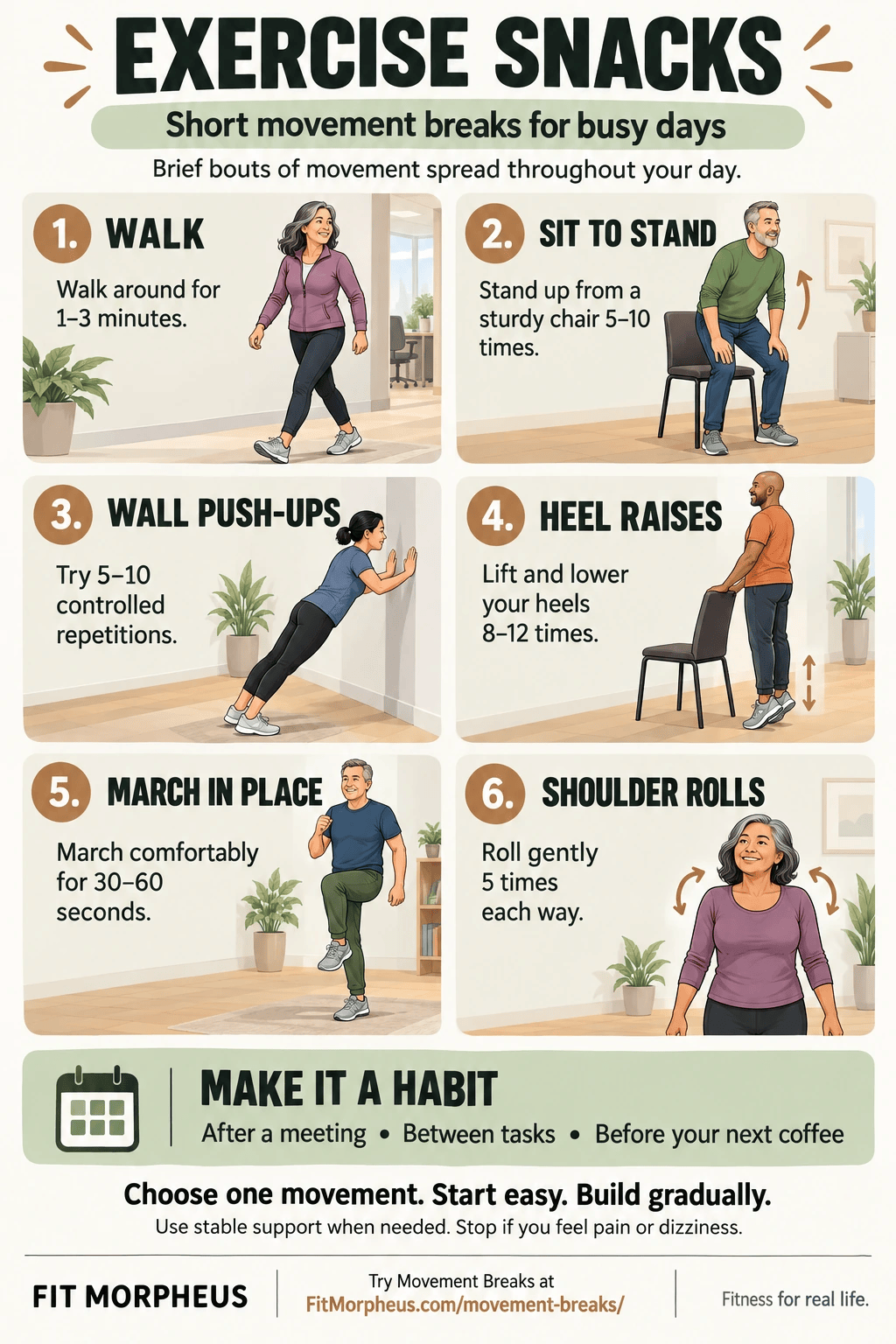
6 exercise snacks to try during your day
Use a clear space, stable footwear or a secure surface underfoot, and a comfortable range of motion. Start below your maximum effort. You should finish these introductory breaks feeling able to return to your day.
1. Walk for 1–3 minutes
Walk around your home, office, or a safe outdoor area. Begin at an easy pace. If it feels comfortable, make part of the walk a little more purposeful without rushing or becoming unsteady.
Try it: After finishing a task, take a short loop before opening the next one. A hallway or a few trips between rooms can be enough space. For a broader look at walking as exercise, read why walking works.
2. Do 5–10 sit-to-stands
Use a sturdy chair without wheels, ideally positioned against a wall. Place your feet securely on the floor. Lean forward slightly from your hips, stand up, then sit back down with control.
Adjust it: Use the armrests or your hands for assistance if needed. Choose a higher seat or fewer repetitions if standing is difficult. Avoid dropping into the chair or forcing a painful movement.
3. Try 5–10 wall push-ups
Face a solid wall and place your palms around chest height, slightly wider than your shoulders. Step back a comfortable distance. Bend your elbows to bring your chest toward the wall, then press away while keeping your body aligned.
Adjust it: Stand closer to the wall to make the movement easier. Keep your shoulders comfortable and breathe throughout the repetitions. You do not need to push to exhaustion.
4. Perform 8–12 supported heel raises
Stand near a stable counter or a sturdy chair secured against a wall. Use light hand support, rise onto the balls of your feet, and lower your heels slowly.
Adjust it: Use both feet together and a smaller range if needed. Keep the movement controlled rather than bouncing. Start with fewer repetitions if your calves tire quickly.
5. March comfortably for 30–60 seconds
Stand upright and alternate lifting your feet at a comfortable height. Keep the pace steady and leave enough room to move without bumping furniture.
Adjust it: Hold a stable counter for balance or march while seated in a sturdy chair. A high knee lift is optional; control matters more than height.
6. Roll your shoulders 5 times each way
Sit or stand comfortably. Slowly move your shoulders through small circles, then reverse direction. Keep your neck relaxed and avoid forcing a large range.
Keep the purpose clear: This is a gentle movement option, not an aerobic workout. If you want a more focused routine, explore the existing shoulder mobility guide.
Need an idea for your next break?
Explore Fit Morpheus Movement Breaks for short movement options you can fit around your day. Choose a comfortable starting point and use it when a natural break appears.
Explore Movement Breaks →How to fit exercise snacks into your routine
Start with a moment that already happens. “Move more” is easy to forget; “walk after my morning meeting” gives you a clear cue.
- After a meeting: Walk for a minute or two before sitting down again.
- Between tasks: Try a few comfortable chair stands.
- Before your next coffee: Take a short walk or do supported heel raises in a clear space away from hot drinks.
- During a screen break: Stand, march gently, or roll your shoulders.
You do not need a reminder for every hour or a perfect streak. Pick one cue first. If you miss it, use the next reasonable opportunity instead of trying to make up a large block of repetitions.
A simple first-week approach
- Days 1–2: Try one brief walk after a familiar daily task.
- Days 3–4: Keep the walk and, if comfortable, add a separate break with one movement from the list.
- Days 5–7: Repeat the breaks that fit best. Keep the same amount if that is enough for now.
This is a habit-building example, not a research-tested exercise-snack prescription. Progress only when the current amount feels manageable. Add a little time, a few repetitions, or another break rather than changing everything at once.
If you already train regularly or have a physically demanding job, consider your total workload. Extra repetitions do not automatically improve your day; sometimes an easy walk or a change of position is the better choice.
Exercise snacks, NEAT, and workouts: how they fit together
Exercise snacks are intentional brief sessions. NEAT refers to energy used for everyday activity outside sleeping, eating, and planned exercise, such as household tasks or walking around at work. The movements can look similar; purpose and context help distinguish them. Read the Fit Morpheus guide to NEAT for that broader picture.
Structured workouts provide planned practice and progression. If your goal is to build strength, your exercise choices and resistance need to become appropriately challenging over time. The Strength Training Over 40 plan covers that weekly training framework.
The WHO recommends 150–300 minutes of moderate aerobic activity, or 75–150 minutes of vigorous activity, or an equivalent combination, each week for adults. It also recommends muscle-strengthening activity involving the major muscle groups on at least two days weekly. Short bouts can contribute, but a light shoulder-roll break should not be counted as moderate aerobic exercise.
You can use movement breaks alongside walks and strength sessions. They give activity another place in your day without requiring every session to serve the same purpose.
Starting exercise snacks after 40
Being over 40 does not require a separate definition of exercise snacks. Choose movements based on your current capacity, experience, recovery, and any individual restrictions.
Begin with controlled, familiar movements. If you have been inactive, avoid jumping straight from sitting to all-out stair sprints. For health conditions, recent surgery, or persistent symptoms that affect exercise, get individualized advice about appropriate activities. Stop if a movement causes pain, dizziness, or unusual symptoms.
For everyday habit ideas beyond this guide, visit the Lifestyle Fitness complete guide.
Exercise snacks: common questions
How long should an exercise snack last?
There is no universal duration. Some research uses bouts under a minute; other approaches use several minutes. For the gentle examples here, choose one activity and use a comfortable duration or repetition count.
How many exercise snacks should I do per day?
There is no single best number for everyone. Start with one or two manageable breaks and see how they fit. A specific fitness goal may require a more structured plan with a defined effort and progression.
Can exercise snacks replace a workout?
They can contribute to your activity, and appropriately designed brief sessions can provide a training stimulus. Whether they meet your needs depends on intensity, total activity, and goals. The gentle movements in this guide do not automatically replace a complete aerobic and strength program.
Do exercise snacks help with weight loss?
They add activity, but energy expenditure varies widely. A few brief breaks should not be presented as a guaranteed weight-loss method. Food intake, overall activity, and consistency across time all influence weight change.
Do I need equipment?
The examples here use your body weight, a solid wall, and a sturdy chair or counter. Choose stable support and a clear space. Avoid rolling chairs or furniture that can slide or tip.
Make your next break a movement break
Choose one activity you can do comfortably and connect it to the next natural pause in your day. Repeat what fits, adjust what does not, and let the habit grow at a manageable pace.
Leave a Reply