
Lifestyle Fitness · Movement for real life
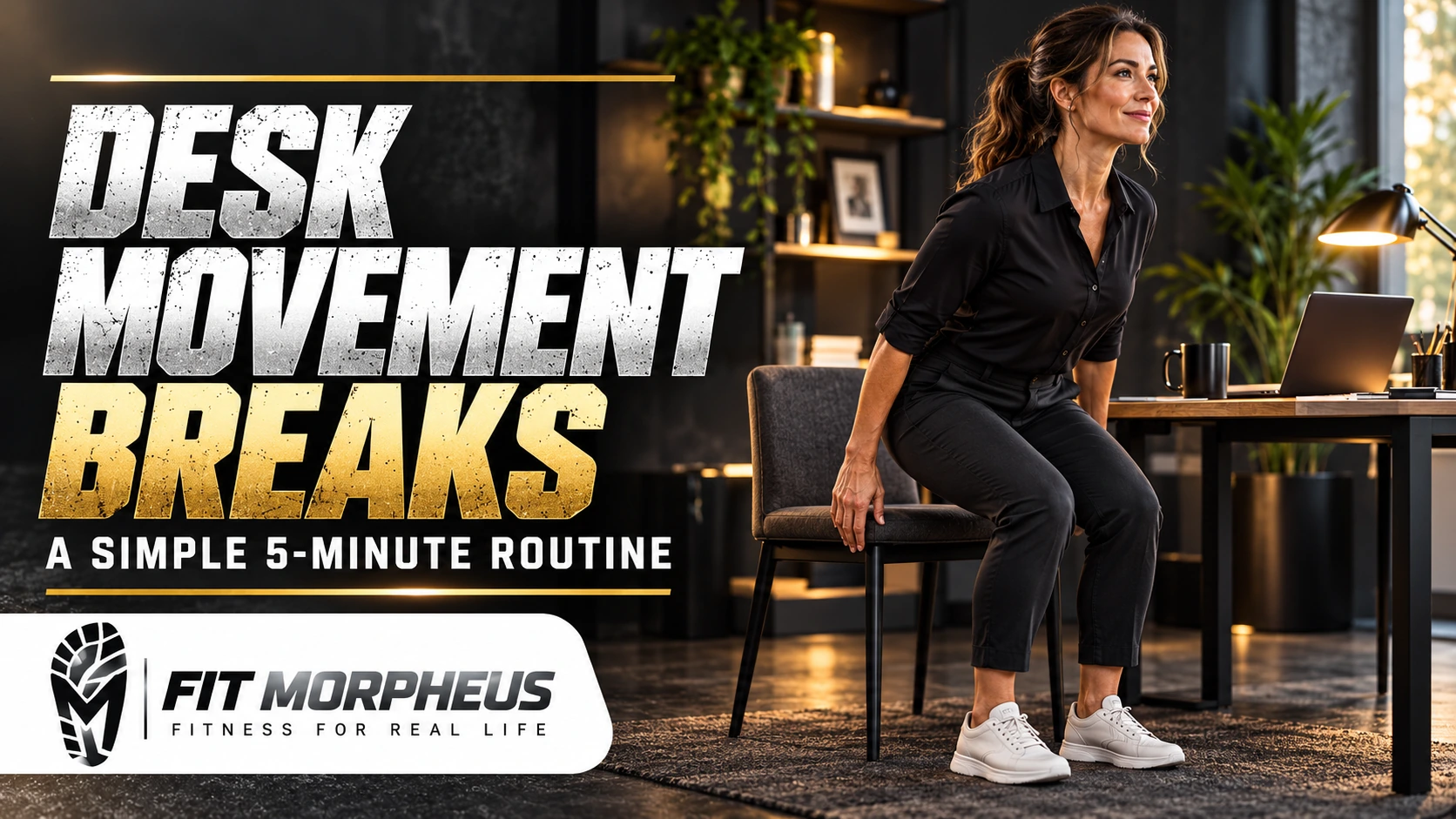
Desk exercises give you a practical way to add movement between meetings, emails, and focused work. This five-minute desk movement break combines six simple activities, with options for staying seated or using stable support.
You do not need to squeeze a demanding workout into your workday. The aim here is to step away from a fixed position, move comfortably, and return to your next task. Use the whole routine when it fits, or choose one movement for a shorter break.
If you are new to the idea of brief activity sessions, start with Exercise Snacks: Short Movement Breaks for Busy Days. This guide puts that idea into a specific desk-friendly sequence.
The five-minute format: One minute of walking or seated marching, 30 seconds of shoulder rolls, 30 seconds of seated trunk turns, then one minute each for sit-to-stands, wall push-ups, and supported heel raises. Each time block includes pauses and getting into position. Do not race to complete repetitions.
Why take a movement break at your desk?
Desk work can keep you in the same position long after you intended to get up. A movement break creates a deliberate change: you leave the keyboard, shift position, and give your body a different task for a few minutes.
The UK Health and Safety Executive recommends frequent brief breaks or changes of activity during screen work. It explains that breaks should provide an opportunity to leave the workstation and move, or at least change posture and stretch. That supports the general approach here; it does not mean this exact six-movement sequence is a clinically tested treatment.
Keep the expectations practical. A short routine does not guarantee pain relief, correct every posture issue, or replace your regular training. It can simply make movement easier to include in a day spent at a desk.
Set up your space before you start
- Choose a stable chair. Use a chair without wheels that cannot slide on the floor. Place it against a wall for sit-to-stands if needed.
- Clear the area. Move bags, cords, and loose items out of your path. Keep hot drinks away from the exercise space.
- Check your support. A fixed counter is better than a light desk that could tip. Use a solid wall for push-ups.
- Stay comfortable. Use a manageable range of motion, breathe normally, and pause before your form deteriorates.
If pain, dizziness, or unusual symptoms appear, stop. Follow any existing exercise restrictions. If a condition or recent procedure makes you unsure about these movements, ask a health professional who knows your situation before trying them.

Your five-minute desk exercise routine
| Time | Movement | Focus |
|---|---|---|
| 0:00–1:00 | Walk or seated march | Easy, comfortable movement |
| 1:00–1:30 | Shoulder rolls | Small, relaxed circles |
| 1:30–2:00 | Seated trunk turns | Gentle upper-body rotation |
| 2:00–3:00 | Sit to stand | Controlled repetitions with rests |
| 3:00–4:00 | Wall push-ups | Steady movement and breathing |
| 4:00–5:00 | Supported heel raises | Slow lifting and lowering |
The clock is a loose guide, not a test. If you need longer to transition safely, let the break run longer or do fewer movements.
1. Walk or seated march — 60 seconds
Take a comfortable walk around a clear area. If staying seated works better, sit upright with your feet supported and alternate small knee lifts, lowering each foot gently. Use the chair for support as needed.
Make it fit: Choose walking when you want to leave the screen behind. Choose seated marching when space, balance, or your circumstances make standing less practical. A small lift is enough; you do not need to bring your knee toward your chest.
2. Shoulder rolls — 30 seconds
Let your arms rest comfortably. Make slow, small shoulder circles, then change direction. Keep your head relaxed and avoid forcing the shoulders upward or backward.
Make it fit: Pause between circles or reduce their size. The movement should feel controlled rather than like an attempt to stretch as far as possible. For a separate, more focused session, explore the shoulder mobility routine.
3. Seated trunk turns — 30 seconds
Keep your feet planted and hips facing forward. Cross your arms loosely over your chest and turn your upper body a small, comfortable distance to one side. Return to center, then try the other side.
Make it fit: Use a smaller turn instead of pulling on the chair to increase rotation. If turning is uncomfortable or restricted for you, skip it and use an easy seated march instead.
4. Sit to stand — 60 seconds
From a secure chair, place your feet about hip-width apart. Lean slightly forward, stand steadily, then lower yourself with control. Use hand assistance if needed.
Make it fit: Start with three to five unhurried repetitions and rest for the remainder of the minute. You do not need to keep moving for all 60 seconds. If standing is unsuitable, use seated marching or rest during this block.
5. Wall push-ups — 60 seconds
Place your hands against a solid wall around chest height. Step back slightly, bend your elbows to move toward the wall, then press away. Keep your body aligned and breathe throughout.
Make it fit: Stand closer to reduce the challenge. Try a few comfortable repetitions, then pause. If your wrists or shoulders object, skip the push-ups rather than forcing them; gentle shoulder rolls or a rest are alternatives.
6. Supported heel raises — 60 seconds
Hold a secure counter lightly. Rise onto the balls of both feet, then lower your heels slowly. Keep the movement small enough to remain steady.
Make it fit: Try five controlled repetitions and pause. For a seated alternative, keep the balls of your feet on the floor and lift and lower your heels. The seated version is a different, generally lighter movement.
Keep a movement idea close by
Explore Fit Morpheus Movement Breaks when you want a short activity to fit the space and time you have. Start with a comfortable option and build a routine you can return to.
Explore Movement Breaks →A seated version for small spaces
You can keep the five-minute structure while changing the activities. Use seated marching for the opening minute, followed by comfortable shoulder rolls and trunk turns. For the last three minutes, alternate brief periods of seated marching, seated heel raises, and rest.
This gives you a seated movement option without pretending it has the same training demands as standing and pushing exercises. Choose movements that suit you; keeping every time slot filled is optional.
How often should you take desk movement breaks?
There is no universal schedule that suits every person and job. HSE gives five to ten minutes each hour as an example of frequent short screen-work breaks, while noting that timing depends on the work. That is workplace guidance, not a requirement to perform this routine every hour.
Start with one or two natural opportunities: after a meeting, before lunch, or between blocks of concentrated work. On other breaks, take a short walk, do another task away from the screen, or simply change position. Avoid turning every reminder into another demand on your day.
A break from the computer is also a chance to leave the phone alone. If you check an exercise instruction on screen, look at it first, then put the device down while moving.
Keep desk exercises alongside your wider fitness plan
This routine is intentionally manageable. It is not designed as a calorie-burning challenge or a complete strength workout. If you already train, keep your desk breaks light enough that they do not interfere with recovery.
For longer activity, a walk before or after work is another option; the walking guide explains how it fits into everyday fitness. For broader daily activity, read what NEAT means. These ideas complement a planned training routine rather than requiring you to choose only one approach.
Common questions about desk movement breaks
Can I do these exercises in work clothes?
Usually, if your clothes allow comfortable movement and your footwear is secure. Adjust the range or choose the seated options if clothing limits you. Avoid any movement that makes your footing unstable.
Do I need to complete all six exercises?
No. One comfortable activity can be enough for a short break. Use the sequence when you have the time and space, and shorten it when needed.
Will desk exercises fix neck or back pain?
This general routine is not a diagnosis or treatment plan. Avoid movements that worsen symptoms. Persistent or worsening pain deserves individualized advice rather than repeatedly trying to stretch through it.
Should I keep moving for each full minute?
No. The times include getting into position, a few controlled repetitions, and rest. Stop before fatigue makes the movement rushed or uncomfortable.
Is a standing desk enough?
A standing desk changes your working position, but standing in one place is different from walking or moving through an exercise. Use a setup that fits you and include opportunities to change tasks and positions.
Make the next task transition a movement break
You do not need a complicated routine to get started. Choose a clear space, one comfortable movement, and a moment between tasks. Repeat the options that fit your day, and adjust the ones that do not.
Leave a Reply